
Running a Sumter County Sex Offender Check
The primary public channel is the Georgia Violent Sexual Offender Registry search. The Georgia Bureau of Investigation operates the statewide system, while county sheriffs collect and submit registration updates. For Sumter County, that makes the GBI portal the best first stop and the Sheriff's Office the practical source for questions about local registration or a suspected failure to comply.
Start with the least ambiguous facts available. A full name may still return several people, and a location can change. Read the status and offense information in context, note when the data was refreshed, and call the responsible agency when a detail affects an immediate safety plan. The registry is updated daily, but sheriffs have up to two business days to submit updates. A no-result is not proof that no duty exists.
Sumter County Registration Office
The Sumter County Sheriff's Office is the local point for registration, list inspection, and questions about compliance. Its public office is at 352 McMath Mill Road in Americus and is open from 8 a.m. to 5 p.m. The main number is 229-924-4094. No Sumter-specific appointment rule, registration fee, or current alert app was verified, so callers should ask what identification or documents are needed before traveling.
Sumter County Sheriff's Office
352 McMath Mill Road
Americus, GA 31719
229-924-4094
Public office hours: 8 a.m. to 5 p.m.
Georgia law also requires an inspectable local list at the sheriff's office and specified public buildings. The online portal remains the easiest broad search, while the sheriff can explain the local submission path.
Searching the Georgia Violent Sexual Offender Registry
The GBI search opens behind conditions of use. Those terms matter because contributing agencies supply the information and details can change. The portal's inner controls require a visual pass after accepting the conditions; the research confirmed the conditions gate but did not verify every field anonymously. Use only the controls actually shown during the live search.
- Open the official GBI registry and read the conditions before accepting them.
- Use the available name or location controls, choosing Sumter County when that filter appears.
- Compare aliases, physical details, address information, and status before deciding a result is the intended person.
- Open the profile, note its update context, and contact the sheriff or GBI when information appears wrong or stale.
| Field Label | Type | Required | Notes |
|---|---|---|---|
| Conditions of use | Acceptance gate | Yes | Must be accepted before inner search controls appear |
| Name controls | Inner search field | Not confirmed | Verify labels after entering the live portal |
| Location controls | Inner search field | Not confirmed | Use Sumter County, city, ZIP, or radius only if displayed |
| Results and profiles | Inner results | Not applicable | Match several identifiers and review update context |
The official registry interface shows the conditions and search path.
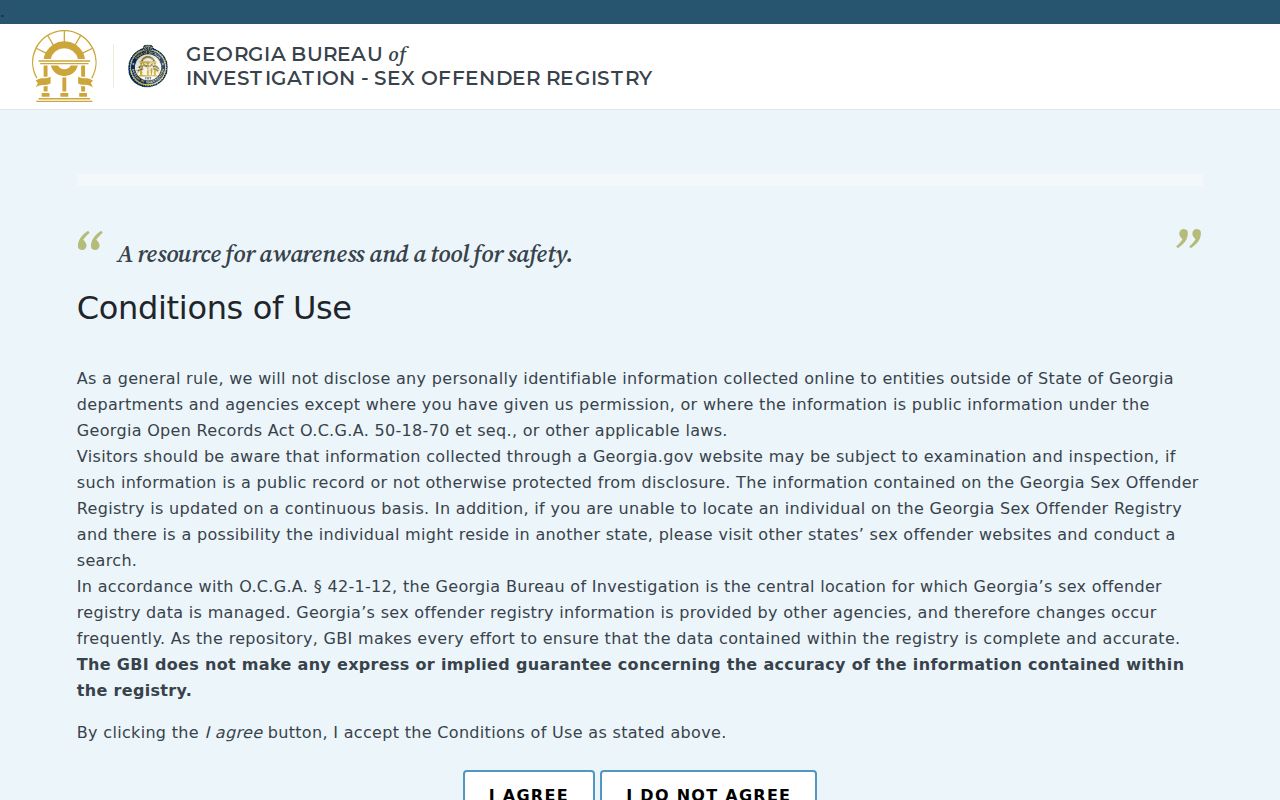
This captured interface helps readers recognize the state-operated search rather than a commercial people-search page.
Sumter County Registry Updates
The GBI registry FAQ says sheriffs submit changes within two business days and the public registry updates daily. Those two clocks explain why a recent move or new registration may not appear at once. A person may also be absent because of a successful First Offender completion, death or deletion, no qualifying duty, incorrect input, or data that has not yet reached the state.
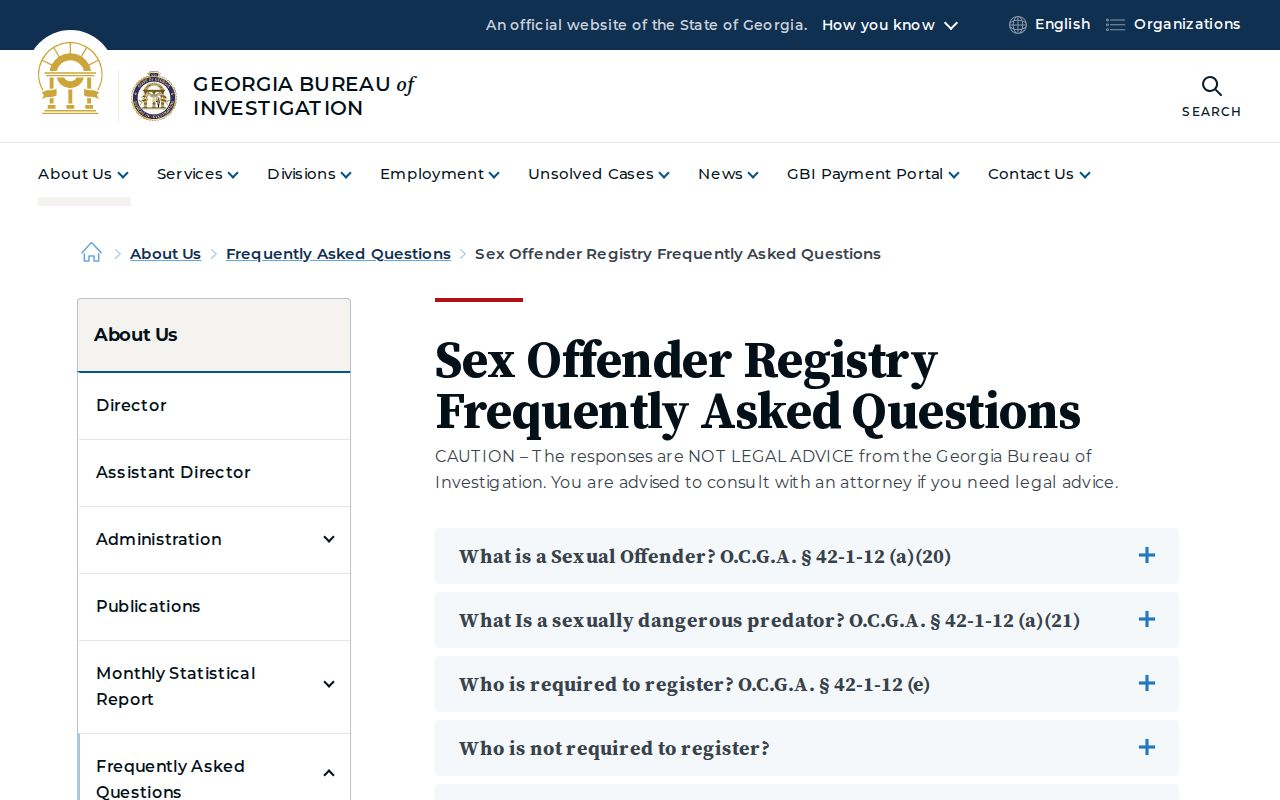
The FAQ provides the right starting point when a Sumter County search does not match an expected record.
Report a possible compliance issue to the Sumter County Sheriff's Office or use the GBI's official absconder-tip route. Do not investigate a residence or approach a listed person.
What a Sumter County Registry Profile Shows
Georgia collects more information than it places on the public list. The statutory file can include prints, phone numbers, work and school ties, vehicles, residence details, offense data, supervision dates, and a photograph. Public access is narrower. It must never be read as permission to expose protected identifiers or victim information.
| Name and aliases | Identity names supplied for the public listing |
|---|---|
| Photo and description | Visual and physical identifiers used to avoid a name-only match |
| Registered location | Public residence information, including special location formats when applicable |
| Offense information | Registering offense and related jurisdiction or statute details made public |
| Classification | Level I, Level II, or sexually dangerous predator designation |
| Status | Compliance or absconder context and available verification information |
The GBI registry landing page explains the official list, downloads, agency role, and accuracy limits.
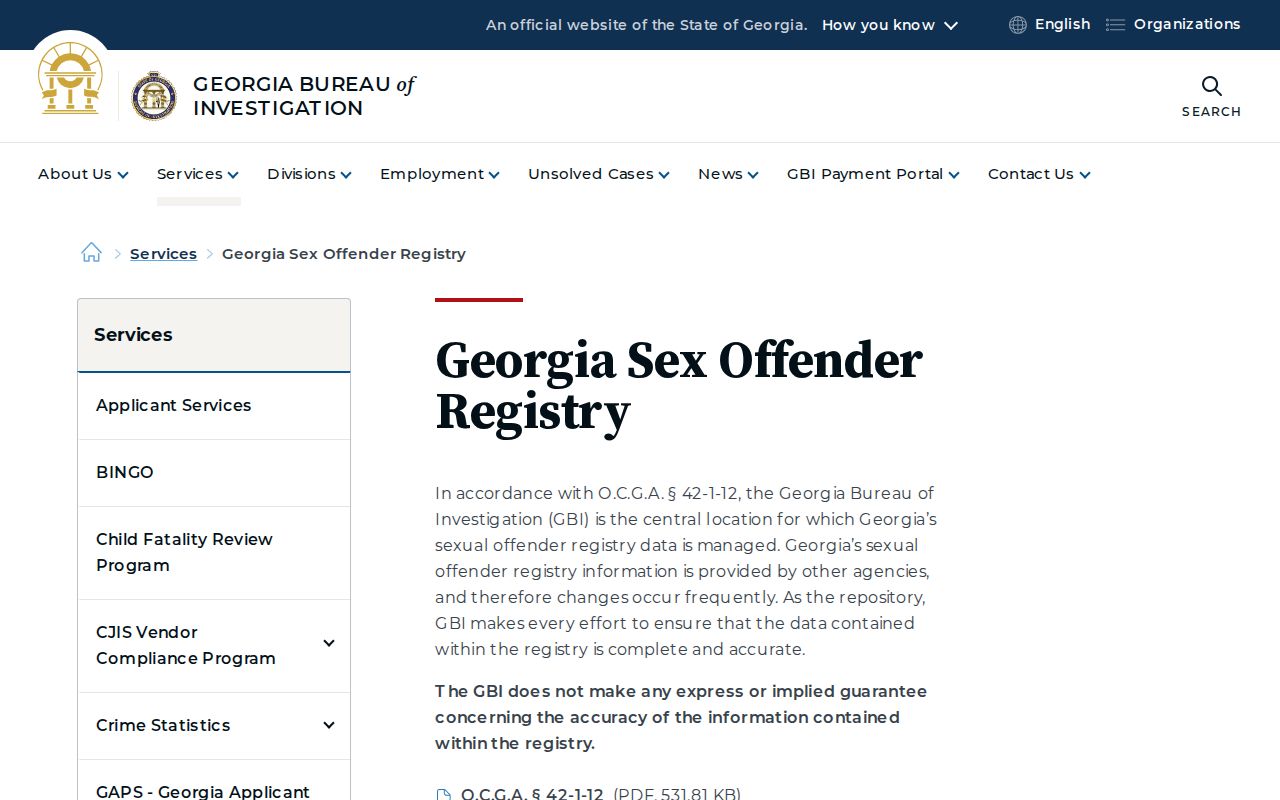
That state page makes clear that local agencies contribute data and that records should be checked in light of frequent changes.
Cross-State Sumter County Searches
A Sumter County address search answers only part of the safety question when someone recently moved or has ties elsewhere. The U.S. Department of Justice operates the National Sex Offender Public Website, which searches participating public registries across jurisdictions. Use it as a second layer, not as a substitute for Georgia's profile and the Sumter County Sheriff's Office.
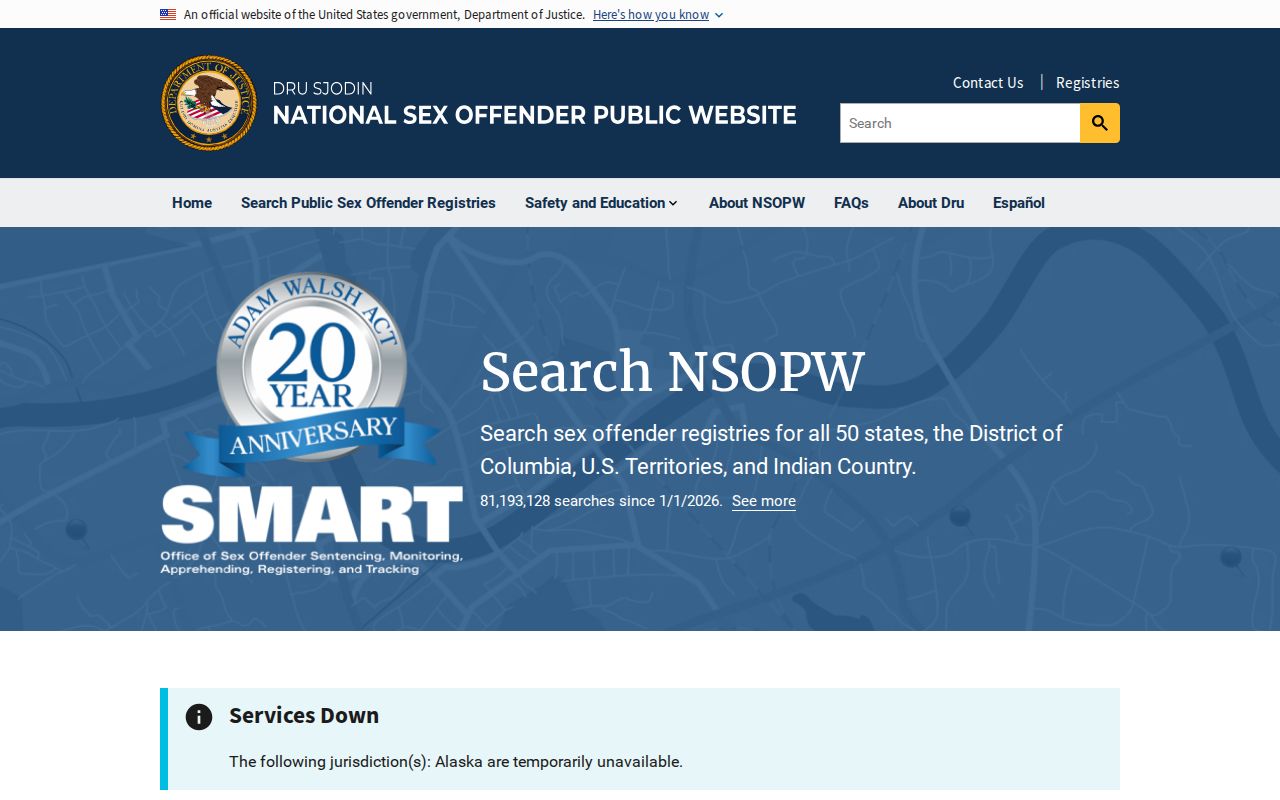
The national interface is especially useful when the relevant location may fall outside Georgia.
Differences between national and state results can reflect timing, source rules, or search input. Confirm the exact profile in the contributing jurisdiction.
Registration Requirements and Levels in Georgia
Georgia does not use the common federal shorthand in which Tier I always means a short fixed term. Under O.C.G.A. §42-1-12, registrants generally register for life, excluding later incarceration, subject to statutory petition provisions. Initial registration is in person within 72 hours after release, placement, or entry into Georgia. Annual renewal occurs within 72 hours before the birthday and includes a new photo and fingerprints.
| Level / Tier | Duration | Verification Frequency |
|---|---|---|
| Level I | Generally life, subject to statutory petition relief | Annual in-person renewal around birthday |
| Level II | Generally life, subject to statutory petition relief | Annual in-person renewal around birthday |
| Sexually dangerous predator | Generally life, subject to statutory petition relief | Annual renewal plus additional semiannual verification and tracking duties |
Address changes must be reported to the old and new sheriff within 72 hours before moving. Other changes generally must be reported within 72 hours. Classification reflects assessed risk, not a simple sentence-length chart.
Georgia Residence Rules Need Dates
Georgia's residence restrictions cannot be reduced to one rule for every Sumter County registrant. The GBI's posted O.C.G.A. §42-1-16 material applies certain 1,000-foot restrictions to conduct during a defined period from July 1, 2006, through June 30, 2008, and includes grandfather and exemption provisions. The offense date and statutory section matter.
Anyone making a move or trying to understand a restriction should obtain advice about the current statute and individual facts. A map estimate is not a legal ruling, and the public registry is not a zoning tool.
Date-sensitive rule: Verify the controlling statute and effective dates before relying on a distance restriction in Sumter County.
Corrections Records Are Separate
A registry profile and a Georgia Department of Corrections file serve different purposes. The registry explains a public registration duty. GDC records address state custody and supervision history. If a releasable correctional document is needed, use the GDC open-records request channel rather than assuming the registry holds it.
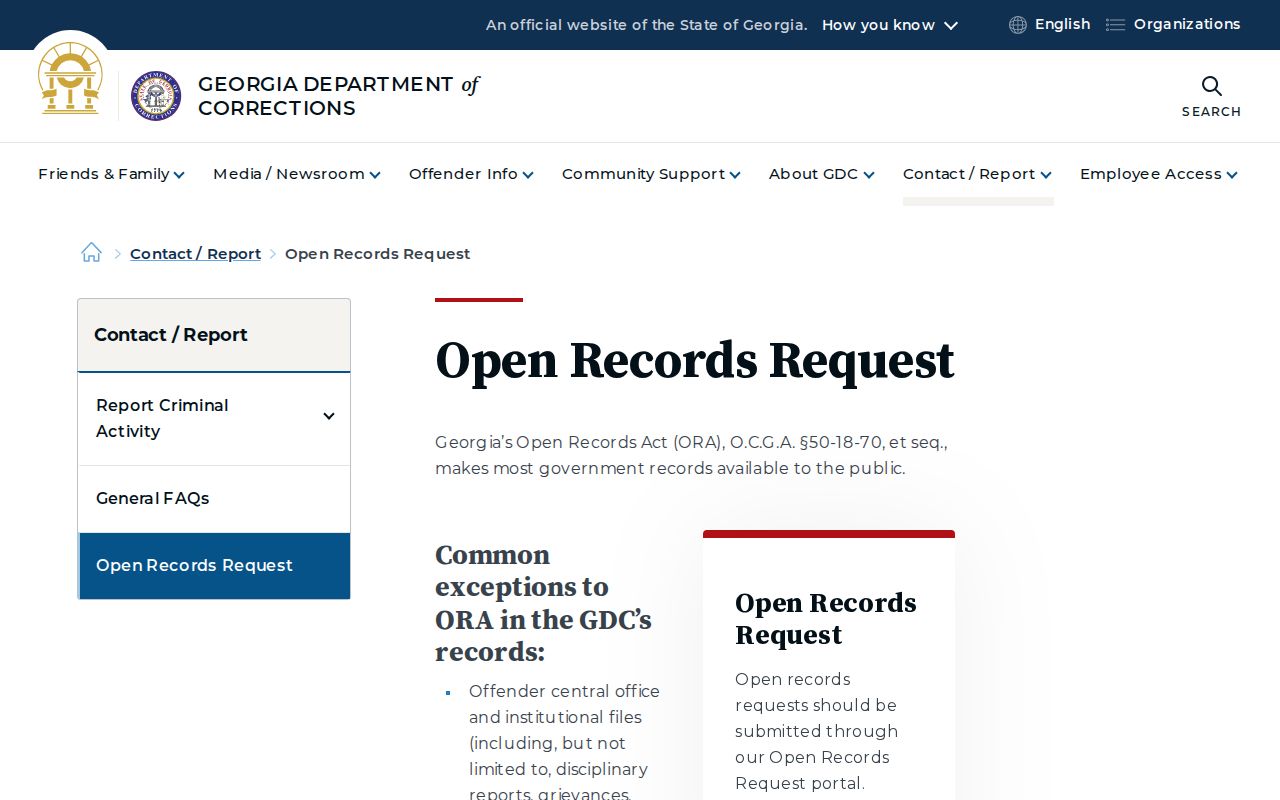
The separate GDC request page shows why one Sumter County offender search may require more than one official custodian.
Lawful Use of Sumter County Registry Information
The sheriff's duties include maintaining an inspectable list, informing the community, and passing additions or updates to schools and higher-education institutions within the statutory period. Public access supports awareness and personal safety. It does not authorize threats, harassment, trespass, vigilantism, or interference with a listed person's household.
Use registry data lawfully: Georgia's inspected registry materials support safety awareness, not confrontation. Harassment, threats, vigilantism, or misuse may violate other criminal laws even though no registry-specific misuse penalty was verified in O.C.G.A. §42-1-12.
When a profile seems inaccurate, contact the contributing agency. When conduct creates an urgent threat, call law enforcement rather than acting on registry information alone.