
How to Check Criminal History in Americus
Start with the event, not a broad name search. An Americus Police Department report tells what officers documented. The municipal clerk answers questions about a city citation or ordinance case. The Sumter jail roster shows a separate custody record after transport, while county clerks hold prosecutions filed in State or Superior Court. A GCIC self-review is the best statewide check of one’s own reported Georgia history. This sequence keeps early allegations apart from later court outcomes.
- Ask Americus Police Records for the incident or arrest report.
- Use the city open-records officer and JustFOIA when a formal request is needed.
- Contact Americus Municipal Court for city traffic, ordinance, or authorized state-offense records.
- Check the Sumter roster and county clerk if booking or prosecution moved to county systems.
- Obtain a GCIC history through an authorized local channel for statewide self-review.
Give the custodian a narrow date range, location, report or citation number, and the type of existing record sought. Ask about redactions, cost, and electronic delivery before work begins. Do not treat a roster entry as a conviction or a portal no-result as proof that no record exists.
Americus JustFOIA Through City Hall
Americus identifies City Clerk Sierra Harvey as its open-records officer. Requests may start at City Hall, 101 West Lamar Street, third floor, by calling 229-924-4411 extension 244 or emailing openrecords@americusga.gov. The city also routes requests through its official JustFOIA gateway. Published office hours are 8 a.m. to 5 p.m. The city says its records are indexed back to 1980, but that statement does not prove every police report exists from that year.
The gateway did not expose a reliable public inventory of every field or fee during research. Describe the record precisely and ask the city which department holds it. A request for an APD incident report should identify the date, approximate time, location, and incident number if known. Formal intake through the clerk does not turn a police report into a court file; those remain different records.
The official city request page is shown below. It is the verified online starting point for an Americus open-records request.
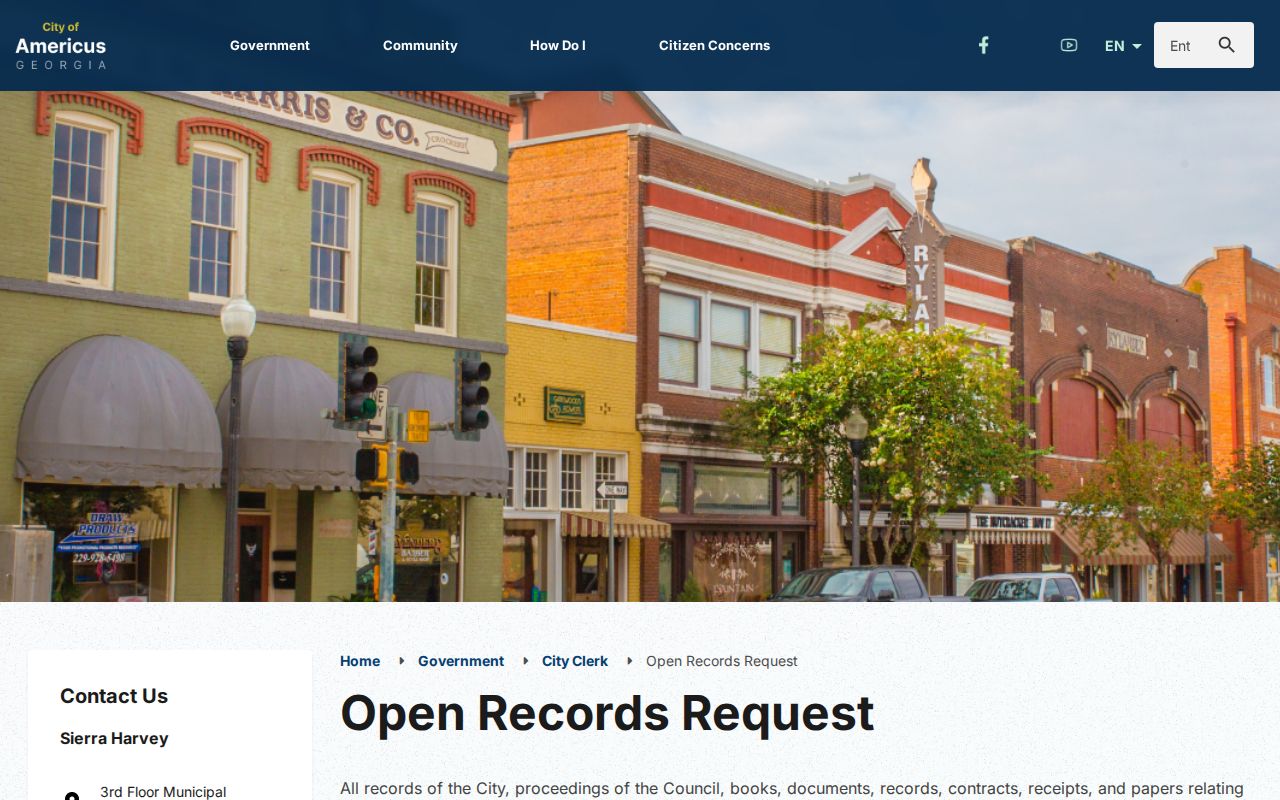
The page connects requesters to the city custodian without promising that protected investigative or personal details will be released.
The Americus Police Department
Americus Police occupies the Russell Thomas Public Safety Building at 119 South Lee Street. The main phone is 229-924-3677, the public email is police@americusga.gov, and office phone hours are 8 a.m. to 5 p.m. Emergency calls go to 911; nonemergency dispatch is 229-937-9011. Middle Flint Regional 911 dispatches APD and other agencies across an eight-county region, but dispatch service does not change who keeps the resulting police report.
APD’s published structure places Records inside Support Services with evidence and property, crime analysis, fingerprinting, and GCIC, NCIC, and CJIS terminal coordination. Major Anthony Jackson commands that area and is listed at ajackson@americusga.gov. The agency reports 44 authorized sworn and seven civilian positions, four patrol teams, investigations, K-9, and Special Operations. These details make APD the right first custodian for an event its officers handled.
The official Americus Police page supplies the department’s current public contacts.
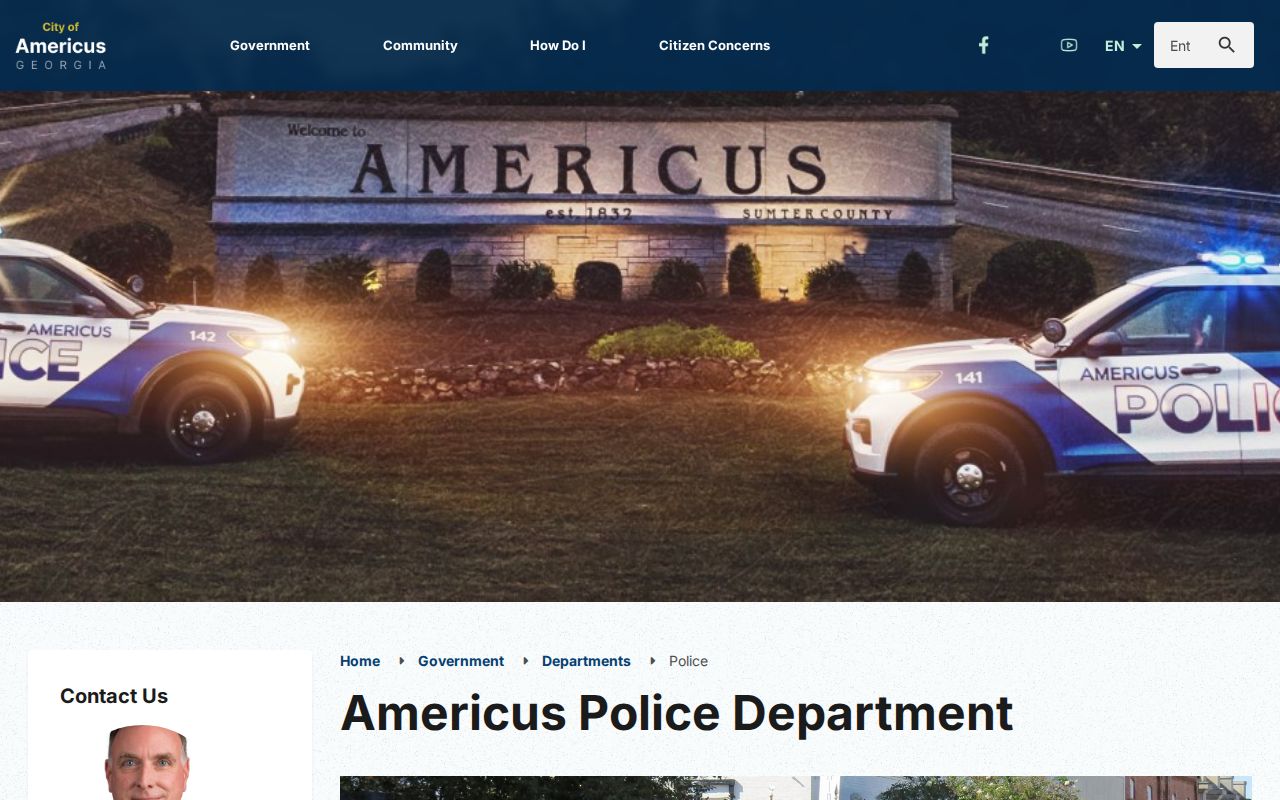
That department page should be checked again before relying on a named official because staffing can change.
Americus Police Reports and City Records
An incident report records what APD documented near the start of an event. It is not the same as a jail intake, municipal docket, county prosecution file, or GCIC history. Ask APD or the city records officer for the police record. Ask the municipal clerk for a citation or city case. When charges were filed in Sumter State or Superior Court, ask the county clerk for that court file.
Georgia’s Open Records Act can require access to existing public records, but it does not require an office to create a new summary or answer questions in place of producing a record. Ongoing investigations, juvenile material, victim details, medical facts, security information, and protected identifiers may be withheld or redacted. A narrow request makes it easier for the custodian to separate releasable portions.
Arrests and Bookings in Americus
APD has a temporary detention area for sobriety testing or short holding. Its published compliance material says it has no court detention area. A person kept in custody is transported to the Sumter County Jail, which creates a new booking record. This verified arrangement explains why an APD event may appear in more than one official system.
Trace the event in stages. Request APD’s report for the officer account. Check the Sumter InteropWeb roster for intake or custody. Then identify whether the filed matter belongs in Americus Municipal Court, Sumter State Court, or Sumter Superior Court. The arrest charge may be changed, reduced, omitted, or replaced by the prosecutor. Release from the roster does not reveal whether bond was posted, a transfer occurred, or the case ended.
County-wide booking interpretation is covered more fully in the Sumter County arrest history resource. Americus readers should still return to APD for the originating police report.
Americus Temporary Holding Explained
The short-hold area and the county jail serve different tasks. APD may briefly hold a person for testing, release, or transport. The jail records formal intake and custody. Neither record establishes guilt. Court filings later show whether a prosecutor brought a charge and how the judge resolved it.
This distinction also prevents a common search error. An absence from the live county roster may mean no current custody, not that APD had no contact or arrest. Older bookings can fall outside a current-inmate view. The police report and court docket remain separate places to check.
Americus Municipal Court Records
Americus Municipal Court is inside the Russell Thomas Public Safety Building. It hears city ordinance violations, traffic matters, and various state offenses within municipal authority. The city has not published a fully inventoried anonymous case-search screen in the research. Contact the municipal clerk with a name, citation number, and approximate date, then ask how to inspect the docket and obtain a disposition or certified copy.
| Court Name | Americus Municipal Court |
|---|---|
| Case Types Heard | City ordinances, traffic matters, and authorized state offenses |
| Case Lookup Channel | Municipal clerk or city records contact; no verified public field inventory |
| What to Request | Citation, docket entries, plea, disposition, sentence, and available orders |
| Copies & Fees | Ask the clerk for current inspection, copy, and certification terms |
The Sumter Superior and State Court clerk does not hold Americus city-offense files merely because Americus is the county seat. Route the search to the county only when the offense was filed under county court jurisdiction.
Americus Crime Trend in Context
APD’s compliance report states that the 2022 Part I crime total was the lowest in more than 30 years and that the last equally low year was 1988. The inspected text did not provide a count or rate, so that trend should not be converted into a percentage. It also does not predict whether a named person has a record.
Crime totals and personal records answer different questions. Agency statistics describe reported events at a broad level. A report, booking, docket, and GCIC history document stages tied to a specific event or identity. Use APD or official state selectors for statistics and the correct custodian for an individual record.
Where Americus Records End Up
An APD report can lead to county custody, a city or county prosecution, and fingerprint-supported reporting to the state repository. Each custodian adds its own record at a different point. A delay between systems is normal, especially before the prosecutor decides what to file or the clerk enters a disposition.
Record flow: Americus Police Department › Americus Municipal Court or Sumter County Courts › Georgia Bureau of Investigation and Georgia Crime Information Center
For recent activity, start with APD and the booking roster. For the legal outcome, use the proper clerk. For one’s statewide reported Georgia history, use a GCIC self-review channel and provide certified court proof when asking the originating agency to correct a missing or wrong disposition.
Americus Justice History and Records
Americus became the permanent seat of justice soon after its creation in 1832. Its first documented city law officer appears in an 1865 depot episode involving Marshal Stephen H. Mitchell, while the first recorded chief, Wilkes W. Wheeler, appears in 1895. These public institutional facts help explain why the city maintains a distinct law-enforcement identity apart from county offices.
The Public Safety Memorial in front of the police building was dedicated in 2021, and an eternal flame followed in 2022. Those landmarks are civic history, not criminal-record repositories. Historical researchers should distinguish city archives and public memorial material from modern APD incident files, municipal dockets, and GCIC histories.
Americus County Court Handoff
A felony prosecution goes to Sumter Superior Court. County misdemeanors generally go to State Court. Municipal authority covers the city matters described above. The county clerk’s case file may contain an accusation or indictment, plea, motions, disposition, sentence, and later orders. It does not replace APD’s narrative or the jail intake.
The District Attorney and Circuit Public Defender are part of the county-level process, not city records counters. The official district attorney page documents the prosecution office.
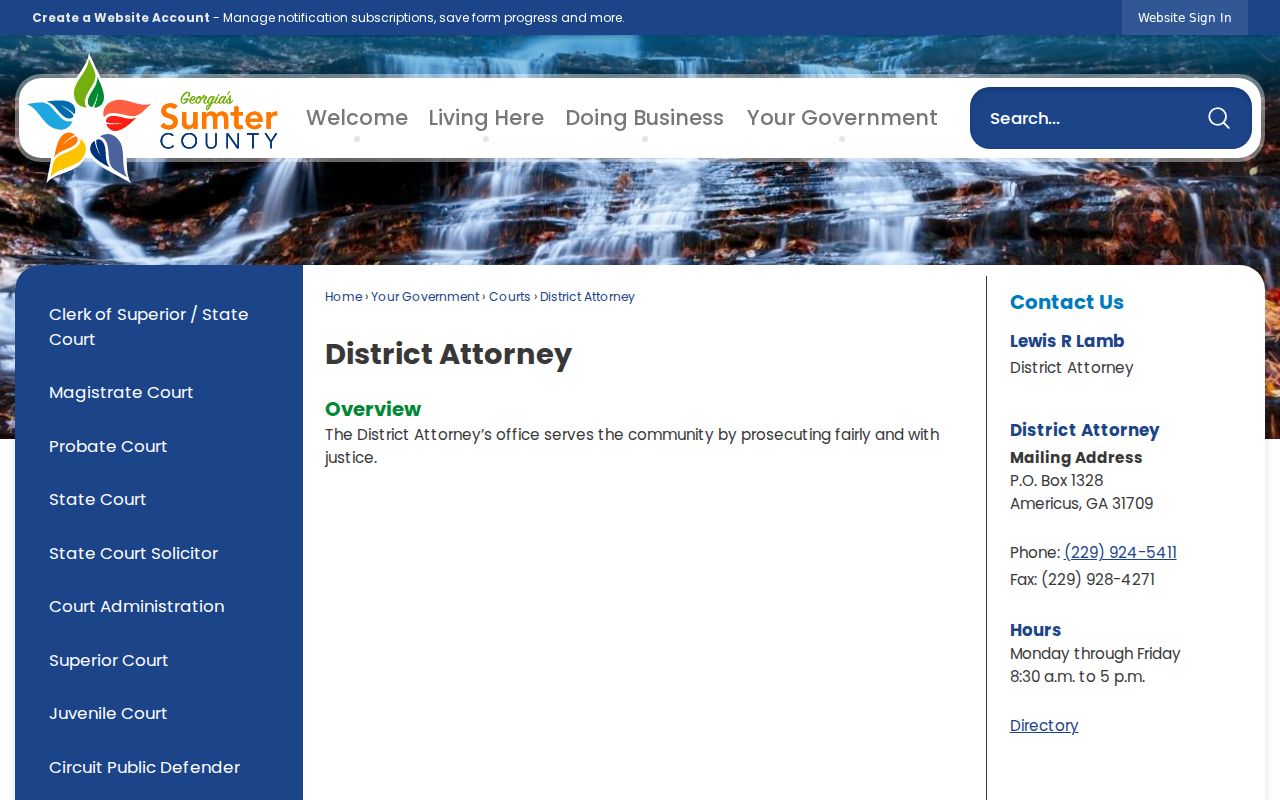
The county prosecutor’s page helps route a filed felony matter after it leaves city-level handling.
The official circuit public defender page identifies the defense office serving eligible Sumter proceedings.
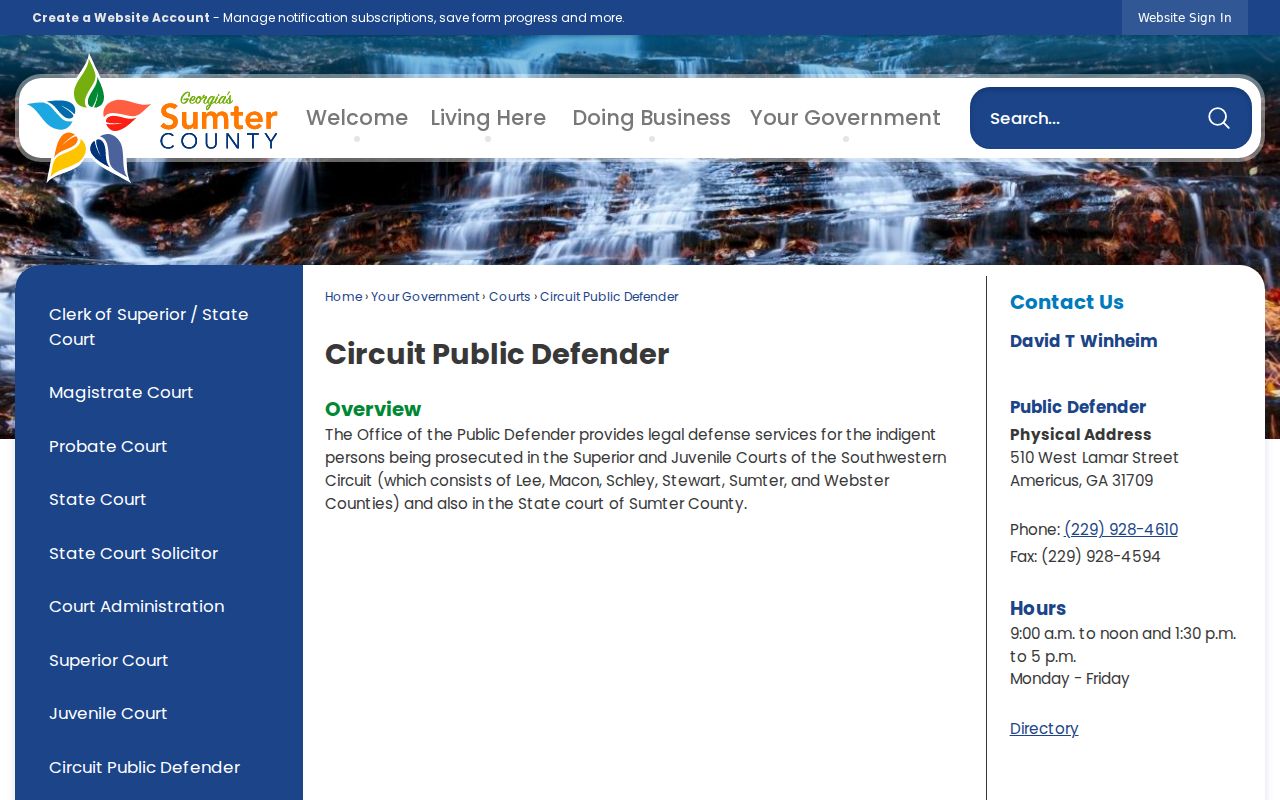
That office is not a public case-search service, but its role shows the county altitude of a prosecution.
Public Access Rules for Americus Records
Public access depends on the record and its custodian. Police and city administrative records are governed by the Georgia Open Records Act. Court files carry a strong access presumption under Uniform Superior Court Rule 21, but a court may limit a defined part by order. Georgia criminal-history dissemination law applies separate consent and felony-conviction rules. Sealed, restricted, juvenile, and protected information does not become public merely because related docket text can be found.
Key Statutes:
Georgia Open Records Act, O.C.G.A. §50-18-70 et seq. gives access to public records while allowing lawful exemptions and redaction.
O.C.G.A. §35-3-34 governs Georgia criminal-history access, consent, and the public felony-conviction channel.
O.C.G.A. §35-3-37 sets Georgia record-restriction and correction procedures.
Uniform Superior Court Rule 21 protects public court-file access subject to defined limits.
Ask for segregable, nonexempt portions if only part of a report is protected. Verify the current custodian, cost, and official before relying on older contact details.
A practical request names the department, existing record type, incident or citation number when known, and a short date range. It also asks for electronic inspection and a cost estimate. That wording helps the city locate the record without asking staff to create a new legal or factual summary.